
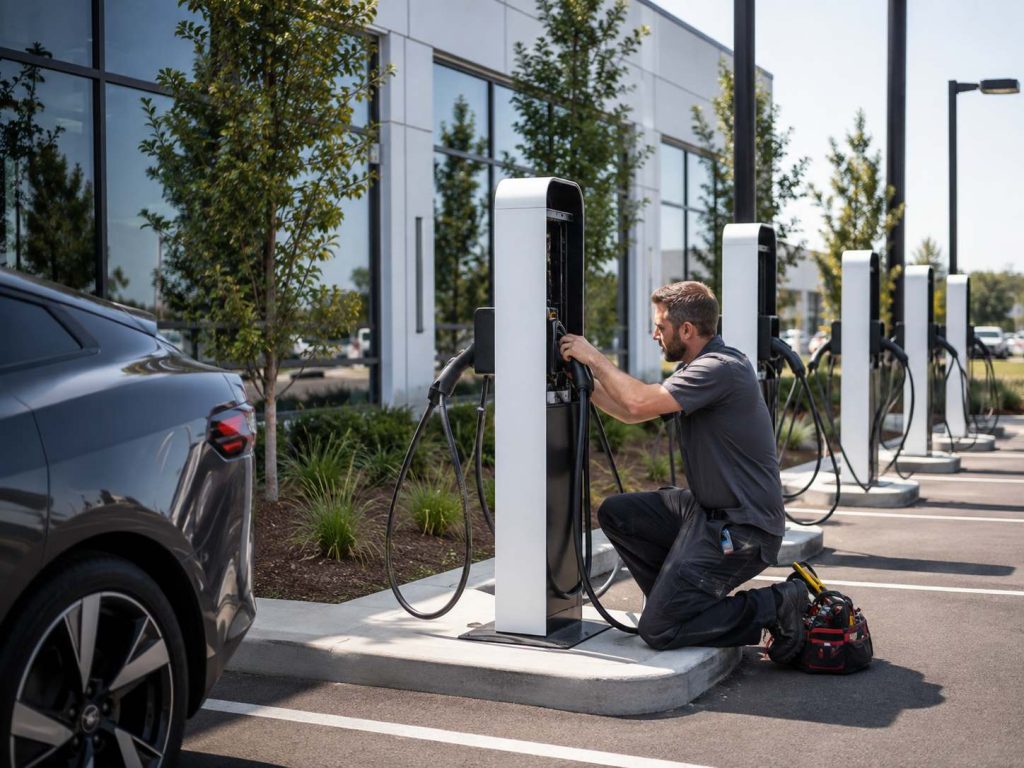
If you are planning to install a Level 2 EV charger at home in Toronto, you may be wondering whether your electrical panel needs to be upgraded first.
The short answer is no—not every Toronto home needs a panel upgrade before an EV charger can be installed. Whether an upgrade is necessary depends on your electrical service capacity, existing household loads, the charging rate you want, the condition and configuration of your panel, and whether an approved energy management solution can be used.
Toronto Hydro recommends having a Licensed Electrical Contractor assess your home’s electrical capacity before installing EV charging equipment. Depending on the home’s existing electrical demand, additional electrical work or a service upgrade may be required, but it is not automatically required for every installation. If you want to understand the installation options for your Toronto home, you can learn more at https://xboct.ca/ev-charger-installation/.
That means the right first step is usually an electrical assessment—not automatically replacing a 100-amp panel with a 200-amp panel.
Do All Level 2 EV Chargers Require a Panel Upgrade?
No.
Installing a Level 2 charger does not automatically mean your home’s electrical panel or electrical service must be upgraded.
A Level 2 EV charger typically represents a significant new electrical load, so the existing system needs to be checked to determine whether sufficient capacity is available. However, the amount of power required depends on the charger and how it is configured.
A home with sufficient unused electrical capacity may be able to add an EV charging circuit without changing its service size.
A home with limited capacity may have several possible options, including:
- installing the charger at an appropriate lower amperage;
- using compatible adjustable EV charging equipment;
- installing an approved Energy Management System;
- modifying other aspects of the electrical installation; or
- upgrading the electrical service when the additional capacity is actually needed.
Ontario Electrical Safety Authority guidance specifically recognizes adjustable EV charging equipment and Energy Management Systems as part of compliant EVSE installation design when applicable requirements are satisfied.
Panel Upgrade vs. Service Upgrade: What’s the Difference?
One of the most important things for Toronto homeowners to understand is that a panel upgrade and a service upgrade are not necessarily the same thing.
Electrical panel upgrade
An electrical panel upgrade may involve replacing an older panel with a newer panel, increasing breaker capacity, addressing obsolete equipment or creating a more suitable distribution setup.
Electrical service upgrade
A service upgrade increases the amount of electrical capacity supplied to the property—for example, changing a home’s service from 100 amps to 200 amps.
Sometimes these projects happen together, but not always.
For example, a homeowner could have a 100-amp electrical service with a panel that needs replacement because of its age or condition. Replacing that panel does not automatically mean the electrical service has been increased to 200 amps.
Likewise, if an EV charger pushes the home’s calculated electrical demand beyond the existing service capacity, a service upgrade may involve work beyond simply changing the breaker panel.
Toronto Hydro has a formal service-upgrade process for customers who need to increase their existing electrical service size.
When Might an EV Charger Require an Electrical Upgrade?
Several situations can increase the likelihood that additional electrical work will be needed.
Your Home Has a 100-Amp Service With Several Large Electrical Loads
A 100-amp service is common in many homes, but whether it can accommodate EV charging depends on what the house already uses.
Large electrical loads can include:
- electric heating;
- central air conditioning or heat pumps;
- electric water heaters;
- electric ranges and ovens;
- clothes dryers;
- hot tubs;
- pool equipment;
- secondary suites;
- workshop equipment; and
- other high-demand appliances.
Adding EV charging to a home that already has substantial electrical demand could push the service beyond the capacity permitted for the proposed installation.
However, 100 amps by itself does not mean an upgrade is mandatory.
The home’s demand needs to be evaluated first.
ESA guidance provides methods for determining whether the existing dwelling service is adequate when EV charging equipment is added.
What If I Already Have a 200-Amp Panel?
Having a 200-amp service can make it easier to accommodate additional electrical loads, but it still does not guarantee that any EV charger can simply be installed at maximum output.
A contractor still needs to consider the home’s existing loads, the proposed EV charger circuit and the requirements of the equipment.
A large home with electric heating, multiple HVAC systems, an electric water heater, pool equipment and other significant loads may use considerably more electrical capacity than a smaller home with gas heating and fewer electric appliances.
Therefore:
100-amp service does not automatically mean “upgrade required,” and 200-amp service does not automatically mean “unlimited capacity.”
The actual electrical demand matters.
Can I Install an EV Charger Without Upgrading a 100-Amp Service?
In some Toronto homes, yes.
A Level 2 EV charger can potentially be installed on an existing 100-amp service if there is sufficient capacity for the additional charging load or if an appropriate load-management solution is used.
This is why getting a load assessment before approving a service upgrade can be valuable.
Depending on the property and EV charger, potential solutions can include lowering the charging current or using an Energy Management System that controls when the EV charger is permitted to draw power.
Ontario electrical guidance permits qualifying Energy Management Systems to monitor loads and automatically control EV charging equipment.
This can be particularly useful in homes where an EV charger would otherwise exceed the available electrical capacity during periods when other large appliances are operating.
How Does EV Load Management Help Avoid an Upgrade?
An EV Energy Management System can dynamically control the amount of electricity available to the charger.
Imagine that several major electrical loads are operating simultaneously:
- the electric range is being used;
- the clothes dryer is running;
- the air conditioner is operating; and
- the EV is plugged in.
Instead of allowing every load to operate at maximum demand regardless of the home’s electrical capacity, an approved load-management system can control the EV charging load.
The charger may temporarily receive less power—or charging may pause—when household demand is high. When sufficient capacity becomes available again, EV charging can resume.
ESA’s current EV charging bulletin specifically addresses Energy Management Systems and their ability to monitor loads and control EVSE loads.
This means a service upgrade is not always the only solution when available electrical capacity is limited.
The suitability of load management depends on the particular electrical system, charger, equipment and installation.
Could I Simply Install a Lower-Amperage EV Charger?
Potentially.
Another common misconception is that every Level 2 charger needs to operate at the highest charging rate its hardware supports.
In reality, charging requirements vary significantly from one household to another.
For someone whose EV is parked overnight for eight or ten hours, a moderate Level 2 charging rate may provide more than enough energy for daily driving.
Some approved fixed-in-place EV charging equipment can also be configured to operate at a lower maximum current when installed and configured according to applicable requirements. ESA’s EV charging guidance addresses adjustable EVSE settings and how they relate to branch-circuit loading.
For homeowners with limited available electrical capacity, selecting an appropriate charging rate can sometimes make the difference between a straightforward installation and a much larger electrical project.
Does an Empty Breaker Slot Mean I Don’t Need an Upgrade?
Not necessarily.
An empty breaker space only tells you that there may be physical room in the electrical panel for another breaker.
It does not answer the more important question:
Does the electrical service have enough capacity for the additional EV charging load?
Panel space and service capacity are different issues.
Your panel could have several unused breaker positions while the home’s overall electrical demand is already close to the available service capacity.
Alternatively, a panel may have limited physical space even though sufficient electrical capacity exists.
Both need to be evaluated as part of the installation.
What Should an Electrician Check Before Recommending a Panel Upgrade?
Before deciding that a panel or service upgrade is necessary, an EV charger assessment should consider several factors.
Existing Service Size
The contractor should identify the home’s existing electrical service rating, such as 100 amps, 125 amps or 200 amps.
Existing Electrical Demand
The home’s current electrical loads need to be considered. This includes major appliances, HVAC equipment and other significant electrical systems.
EV Charger Requirements
The charging equipment’s voltage, maximum current and installation requirements affect the size of the circuit and the additional demand being introduced.
Panel Condition and Configuration
The physical condition of the existing equipment also matters.
Even when adequate electrical capacity exists, an older or unsuitable panel may require other work before the charger circuit can be installed safely.
Charging Needs
The fastest available home charging speed is not necessarily the right choice for every driver.
Your typical daily driving distance, EV battery size and overnight parking time can help determine how much charging power you actually need.
Load Management Options
If the existing electrical service does not have enough unused capacity for the desired charger output, an approved load-management solution may be evaluated before moving directly to a full service upgrade.
When Is a 200-Amp Service Upgrade Worth Considering?
There are situations where increasing the home’s electrical capacity may be the most practical long-term solution.
For example, a service upgrade may make sense if you are planning several electrification projects, such as:
- a Level 2 EV charger;
- a second EV charger;
- heat-pump heating;
- heat-pump water heating;
- an induction range;
- electric heating equipment;
- a hot tub or pool;
- a basement apartment; or
- future renovations that will substantially increase electrical demand.
In these cases, the EV charger may be only one part of a broader increase in the home’s electrical requirements.
Toronto Hydro provides a dedicated process for homeowners and contractors who need to request an electrical service upgrade.
If your only planned addition is one home EV charger, however, it is worth determining whether the existing service can accommodate it before assuming a full 200-amp conversion is necessary.
Can Toronto Hydro Tell Me If I Need an Upgrade?
Toronto Hydro advises homeowners considering EV charging to have a Licensed Electrical Contractor evaluate their existing electrical capacity and determine the appropriate charging solution.
If the assessment determines that an increase in electrical service size is required, Toronto Hydro’s service-upgrade process can then become part of the project.
This is another reason to involve the electrical contractor early: the contractor can determine whether the proposed EV charging installation can work with the existing service or whether coordination with Toronto Hydro is necessary.
Does the EV Charger Installation Need to Follow ESA Requirements?
Yes.
EV charging equipment and installations in Ontario are subject to electrical safety requirements.
ESA advises homeowners to use approved EV charging equipment bearing a recognized Canadian certification mark. ESA also states that a Licensed Electrical Contractor is required to file a Notification of Work for an EV charger installation before starting the electrical work.
This makes an EV charger different from simply plugging an ordinary appliance into an existing household receptacle.
The circuit, equipment, electrical capacity and installation need to be appropriate for the charging system being installed.
Should I Upgrade My Panel Before Buying an EV Charger?
Usually, it makes more sense to assess the electrical system and your charging requirements before deciding on an upgrade.
A practical sequence is:
- Determine which EV you have or plan to purchase.
- Decide how much home charging speed you realistically need.
- Identify the EV charger you are considering.
- Have the existing electrical service and panel assessed.
- Determine whether the charger can be installed using existing capacity.
- Evaluate load management or a lower charging output if capacity is limited.
- Upgrade the panel or electrical service if the assessment shows it is necessary.
This approach helps ensure the electrical work is designed around your actual charging requirements instead of upgrading equipment based only on assumptions.
How Much Electrical Work Will My Toronto EV Charger Need?
The amount of electrical work varies significantly from one property to another.
For example, an installation may be relatively straightforward when the panel has sufficient capacity and is located close to the garage.
A different property might require:
- a longer wiring run;
- finished-wall access;
- outdoor conduit;
- routing to a detached garage;
- load-management equipment;
- panel modifications; or
- an electrical service upgrade.
For that reason, EV charger installation should be evaluated as a property-specific project rather than priced or designed based solely on the vehicle.
Frequently Asked Questions
Do I need to upgrade from 100 amps to 200 amps for an EV charger in Toronto?
Not automatically. A 100-amp home may be able to accommodate Level 2 EV charging depending on its existing electrical demand, charger configuration and whether an approved load-management solution is appropriate. ESA provides guidance for evaluating existing dwelling services when EV charging equipment is added.
Can I install a Level 2 EV charger with my existing panel?
Possibly. Your existing service capacity, household electrical loads, panel condition and proposed charger output need to be evaluated.
Will a 40-amp or 48-amp EV charger require a panel upgrade?
Not necessarily. The answer depends on the home’s available electrical capacity and the installation design. Higher charging loads require greater available capacity, so an electrical assessment should be performed rather than deciding based on charger amperage alone.
Can load management prevent a 200-amp upgrade?
In some installations, yes. Approved Energy Management Systems can control EV charging loads based on available electrical capacity and may provide an alternative to increasing service size.
Is replacing my electrical panel the same as upgrading my service?
No. A panel replacement changes the electrical distribution equipment, while a service upgrade increases the electrical capacity available to the property. The two projects can occur together, but they are not the same thing.
Who should determine whether I need an electrical upgrade?
Toronto Hydro recommends having a Licensed Electrical Contractor assess the home’s electrical capacity when planning home EV charging.
Final Answer
You do not automatically need a panel upgrade before installing an EV charger at home in Toronto.
The decision should be based on your home’s existing electrical capacity, current household loads, EV charger requirements and the charging speed you actually need.
If there is enough capacity, the charger may be installed using the existing service.
If capacity is limited, an appropriately configured charger or approved Energy Management System may sometimes allow the installation to proceed without increasing the electrical service.
And when the home’s existing demand genuinely leaves insufficient capacity—or when you are planning broader home electrification—a panel and/or service upgrade may be the more practical solution.
The key is to have the electrical system assessed before assuming that upgrading from 100 amps to 200 amps is required.