
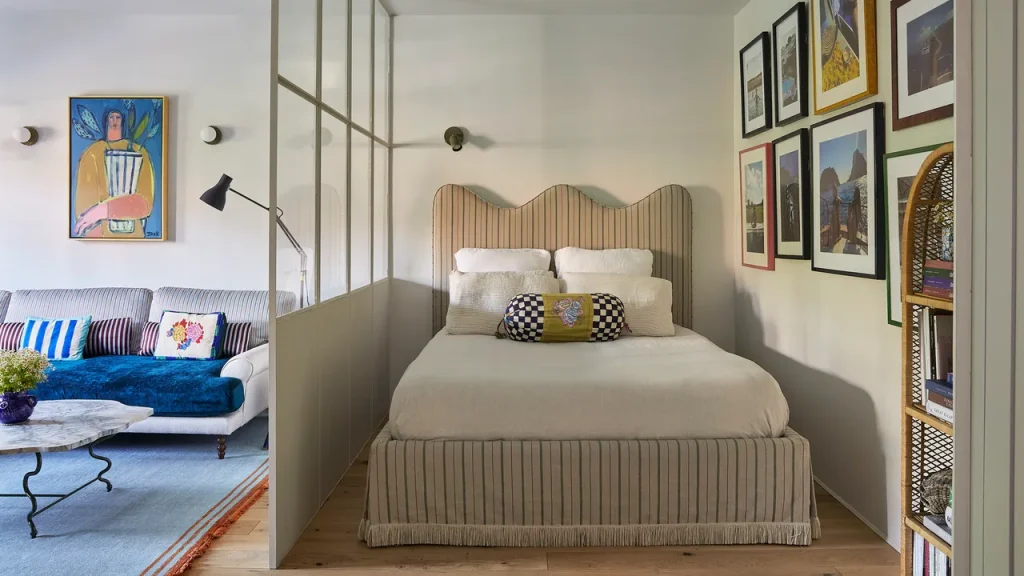
A cramped bedroom often feels like a storage problem, but the layout is usually the first thing worth fixing. Small bedroom problems become easier to manage when furniture supports clear movement, unused areas become functional, and every large piece earns the floor space it occupies.
The goal isn’t to squeeze more objects into the room. It’s to make the available space work harder without making the bedroom feel crowded.
Start With the Biggest Furniture Decisions
The bed controls most bedroom layouts because it usually occupies more floor space than anything else. Before adding shelves, baskets, or organizers, decide whether the bed is positioned efficiently.
Placing it against the longest usable wall often creates better circulation. In some rooms, shifting the bed only a few inches can open a cleaner path between the doorway, closet, and window.
Protect Walking Space
Try to keep the main route through the bedroom visually clear. Furniture corners sticking into that route can make even an adequately sized room feel tight.
Interior inspiration found through broader regional lifestyle reading can spark ideas, but measurements should drive the final layout. A design that looks spacious in a photograph may depend on dimensions completely different from yours.
Use Vertical Space Before Adding More Furniture
Walls provide storage without consuming additional floor area. Shelves above a desk, narrow wall-mounted cabinets, hooks behind doors, and taller bookcases can replace several low storage pieces.
The strongest vertical solutions keep frequently used objects within comfortable reach while moving seasonal or decorative items higher.
| Space Problem | Smarter Layout Move | Practical Benefit |
|---|---|---|
| Crowded floor | Wall shelves | Frees walking room |
| Bulky nightstands | Floating shelves | Opens bedside space |
| Limited closet | Tall storage | Uses vertical height |
| Loose accessories | Door hooks | Reduces surface clutter |
Researching different decorating approaches through general home inspiration may give you fresh ideas, but avoid buying storage products before deciding exactly where they will go.
Choose Furniture That Performs More Than One Job
Multifunctional furniture matters more in a small bedroom because every piece occupies valuable space. A bed with drawers can replace a separate dresser, while a storage bench can provide both seating and hidden organization.
Scale matters too. An oversized dresser that technically fits can dominate the room and make movement awkward.
Keep Visual Weight Under Control
Furniture with visible legs often creates a lighter appearance because more flooring remains visible. Slim frames, shallow cabinets, and simple shapes can make a room feel less boxed in.
Ideas gathered from everyday design coverage can help identify styles you like, but the best choice is still the one that matches your actual room dimensions.
Control Clutter at the Surfaces
A bedroom can have plenty of storage and still feel crowded when every surface is full. Nightstands, dressers, windowsills, and desks quickly become collection points for chargers, receipts, cosmetics, clothing, and small accessories.
Create a specific home for objects you use regularly. Items without a regular purpose should either move elsewhere or leave the room entirely.
Where Small-Bedroom Makeovers Often Fail
Buying organizers before reducing unnecessary belongings can create organized clutter rather than meaningful space. Another mistake is pushing every piece of furniture against a wall simply because the room is small.
Sometimes a slightly different arrangement creates clearer zones and better movement. Measure first, test possible layouts, and avoid assuming that adding storage automatically makes a bedroom feel larger.
Frequently Asked Questions
What furniture should be removed first from a small bedroom?
Start with pieces that duplicate another function. An extra chair, second dresser, unused table, or decorative cabinet may consume valuable floor space without improving daily comfort.
Can a large bed work in a small bedroom?
Yes, provided the remaining layout still allows comfortable access to essential areas. A larger bed may even work better when it includes built-in storage that removes the need for additional furniture.
Do mirrors make small bedrooms look bigger?
Mirrors can create a stronger sense of depth and reflect available light. Their effect is most noticeable when positioned where they reflect an open part of the room rather than a cluttered surface.
Make the Layout Earn Every Inch
Start with the bed, protect the main walking route, and then build storage upward instead of outward. Small bedroom problems become much easier to solve when furniture placement comes before decoration and extra organizers.
Measure the room, remove low-value pieces, and test one layout change at a time. A calmer bedroom often comes from owning less floor furniture, not finding more places to squeeze it in.