
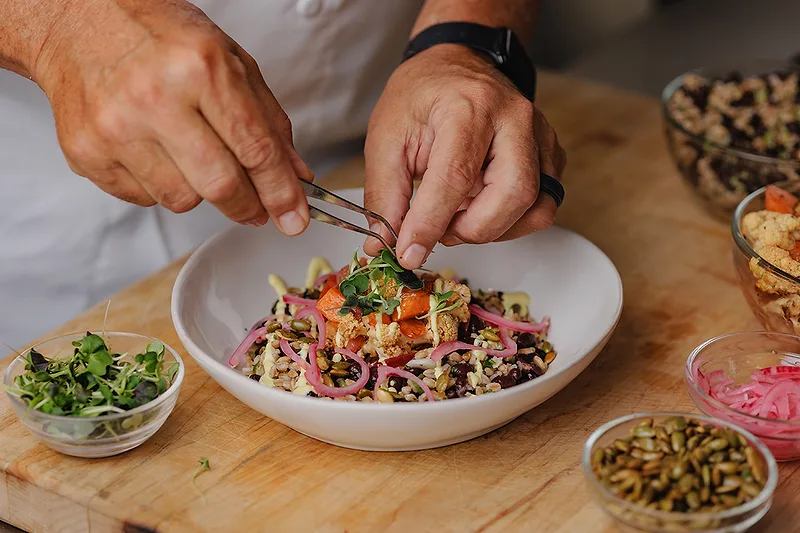
High sodium meals often get their strongest flavor from packaged sauces, seasoning mixes, cured foods, and restaurant preparation. Cutting back does not require bland food. Herbs, acids, aromatics, spices, and cooking techniques can create plenty of flavor while reducing dependence on salt.
Where Does Most Sodium Come From?
The salt shaker is only part of the picture. The FDA reports that more than 70% of dietary sodium comes from packaged and prepared foods, making labels especially useful when comparing similar products.
Bread, soups, deli meats, pizza, sauces, seasoning packets, and ready-made meals can contribute substantial sodium across a day. A meal does not even have to taste extremely salty to contain a meaningful amount.
Check the Whole Meal
Look beyond the main ingredient. A chicken bowl may include sodium from seasoned chicken, broth-cooked rice, cheese, dressing, and bottled sauce.
People browsing general wellness topics online may encounter many different nutrition ideas, but Nutrition Facts labels provide a more concrete way to compare packaged foods.
Build Flavor Before Reaching for Salt
Acid is one of the easiest replacements for some of the brightness people expect from salt. Lemon juice, lime juice, vinegar, tomato, or a small amount of unsweetened citrus zest can wake up vegetables, grains, fish, and meats.
Fresh garlic, ginger, onions, smoked paprika, cumin, black pepper, chili, rosemary, basil, and thyme add different flavor layers. Browning vegetables or roasting them can also create deeper flavors without relying entirely on sodium.
For broader healthy lifestyle reading, it helps to remember that practical food changes usually work better when they remain enjoyable enough to repeat.
| Flavor Problem | Lower-Sodium Approach | Useful Example |
|---|---|---|
| Food tastes flat | Add acid | Lemon on roasted vegetables |
| Savory flavor is weak | Add herbs or spices | Garlic, cumin, paprika |
| Texture feels boring | Roast or grill | Charred peppers or onions |
| Sauce adds too much salt | Use less or dilute | Yogurt-herb dressing |
Compare Packaged Foods Instead of Banning Them
Two versions of the same food can contain noticeably different amounts of sodium. Comparing labels may therefore accomplish more than simply avoiding the salt shaker.
The FDA recommends using the Nutrition Facts label to evaluate sodium and serving size. Its sodium guidance also explains why prepared foods deserve attention.
A person exploring everyday nutrition resources should still treat official nutrition guidance and personal medical advice as separate from general web content.
The Mistake of Cutting Salt Too Aggressively
Removing nearly every salty ingredient at once can make meals disappointing and harder to maintain. A gradual approach gives your palate time to adjust while you learn which ingredients actually contribute the most sodium.
It is also unnecessary to label individual foods as completely “good” or “bad.” Frequency, serving size, the rest of the diet, and individual health needs all matter.
When Should You Get Professional Guidance?
People with high blood pressure, kidney disease, heart disease, or medical instructions involving sodium may have needs that differ from general nutrition advice. A clinician or registered dietitian can help translate those needs into realistic food choices.
Seek prompt medical care for serious symptoms such as chest pain, severe shortness of breath, fainting, or sudden neurological changes rather than trying to correct them through diet alone.
Frequently Asked Questions
Can food taste good with less salt?
Yes. Acid, herbs, spices, garlic, onions, roasting, grilling, and toasted ingredients can add strong flavor. Combining several techniques usually works better than simply removing salt without replacing its culinary role.
Are canned foods always too high in sodium?
No. Sodium varies considerably by product. Lower-sodium and no-salt-added options are available, and rinsing certain canned foods such as beans or vegetables may reduce some surface sodium.
Does sea salt contain less sodium than table salt?
Different salts can vary in crystal size and how much fits into a teaspoon, but they all contain sodium. Switching salt types is not the same as reducing overall sodium intake.
Make Flavor Do More of the Work
Reducing sodium becomes easier when the goal shifts from “remove salt” to “build better flavor.” Compare packaged foods, experiment with acids and spices, and change the biggest sodium sources first. Small repeated adjustments can produce meals that still feel satisfying without depending so heavily on salty ingredients.
This article is for general informational purposes and is not a substitute for professional medical advice, diagnosis, or treatment.