
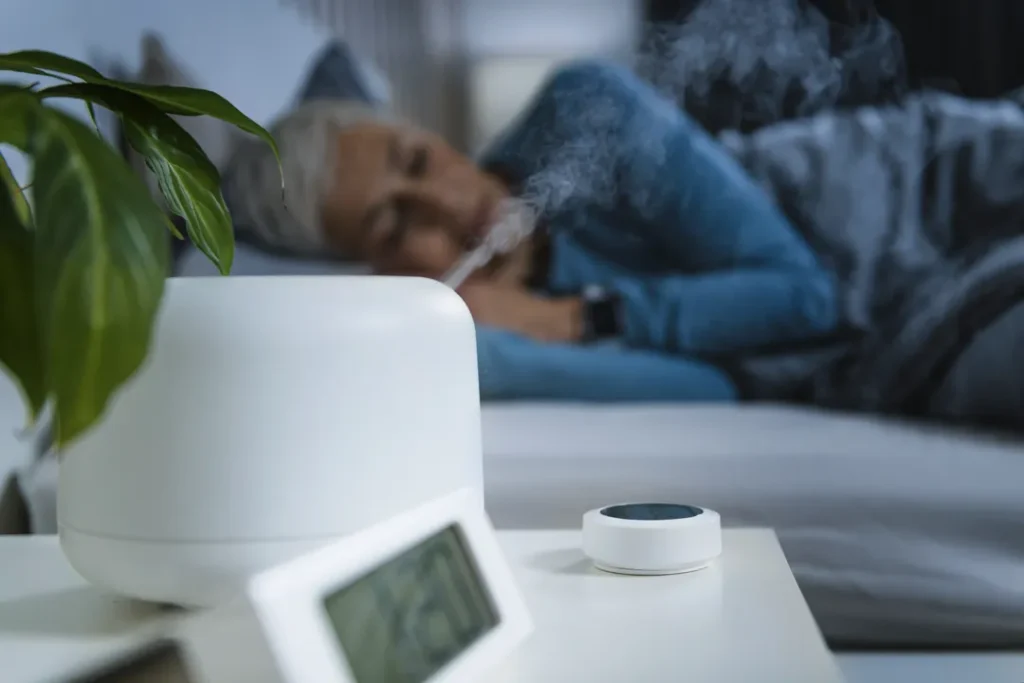
Dry bedroom air can leave your nose, throat, lips, and skin feeling uncomfortable, especially when indoor heating runs for long periods. Adding some moisture may help, but more humidity isn’t always better. The goal is to make the room more comfortable without creating condensation, damp surfaces, mold-friendly conditions, or problems from a poorly maintained humidifier.
Why Bedroom Air Becomes Uncomfortably Dry
Heating systems can make indoor air feel noticeably drier during colder months. You may wake with a dry mouth, scratchy throat, irritated nasal passages, or cracked lips even though you aren’t sick.
Before assuming humidity is the only issue, consider other bedroom factors. Dust, smoke, fragrances, poor ventilation, mouth breathing, and certain health conditions can produce similar discomfort.
People sorting through everyday wellbeing reading may encounter many explanations for nighttime dryness, but room conditions and persistent physical symptoms need to be considered separately.
Add Moisture in a Controlled Way
A humidifier can add water vapor to dry indoor air. The U.S. Environmental Protection Agency notes that humidifiers may relieve discomfort involving a dry nose, throat, lips, and skin, while warning that excessive moisture can encourage biological growth. Its home humidifier guidance advises keeping relative humidity from becoming excessively high.
A small hygrometer is useful because comfort alone is an unreliable measure of humidity. If windows become wet, walls feel damp, or moisture collects near the humidifier, reduce its output.
| Room Clue | Possible Meaning | Practical Response |
|---|---|---|
| Dry nose or lips | Air may be too dry | Measure room humidity |
| Wet windows | Moisture may be excessive | Reduce humidifier output |
| Damp bedding or walls | Too much local moisture | Reposition or stop humidifier |
| Musty odor | Possible moisture problem | Check for damp materials |
Keep the Humidifier Clean
Adding moisture with a dirty machine can create a different indoor-air problem. Water tanks and internal surfaces need regular cleaning according to the manufacturer’s instructions, and standing water shouldn’t be left indefinitely.
General health-focused topics can help build awareness around home habits, but the operating manual for your particular humidifier should guide cleaning, filter replacement, and safe water use.
Cool-mist and ultrasonic models deserve particular attention because material from the tank can become dispersed into the room. Fresh water and routine maintenance matter more than simply switching the machine on every night.
Don’t Treat Humidity as the Only Fix
Dryness may continue even after the bedroom feels more comfortable. Nasal congestion can lead to mouth breathing, while allergies, smoke, irritating cleaning products, or some medications may contribute to dryness.
Looking through everyday health resources can expose you to possible explanations, but persistent symptoms deserve proper evaluation rather than repeated changes to room humidity.
Small Changes Beyond the Humidifier
Keep drinking water available, avoid smoke in the bedroom, and consider whether strong fragrances or air fresheners are irritating your nose or throat. Cleaning dusty surfaces may also help when irritation rather than dryness is the main problem.
Where People Often Go Wrong
A common mistake is turning a humidifier to its highest setting because the room still feels dry. Humidity can become excessive before you notice obvious discomfort.
Another error is assuming condensation means the device is working well. It usually means moisture is accumulating faster than the room can manage. More humidity can support mold and dust mites, so the aim is balanced indoor moisture rather than the dampest possible air. The EPA generally recommends indoor relative humidity around 30% to 50%.
When Dryness Needs Medical Attention
Get medical advice if throat, nasal, breathing, or skin symptoms are persistent, worsening, unexplained, or severe despite reasonable changes to the environment.
Seek urgent evaluation for significant difficulty breathing, severe chest symptoms, blue or gray discoloration of the lips or face, confusion, or other signs of serious breathing trouble. A humidifier shouldn’t be used as a substitute for medical assessment when respiratory symptoms are significant.
Frequently Asked Questions
Should a humidifier run all night?
It can run while you sleep if the model is designed for that use, maintained properly, and room humidity stays controlled. If condensation develops or nearby surfaces become damp, reduce the output or operating time.
Can too much bedroom humidity cause problems?
Yes. Excess moisture can encourage mold, dust mites, and other biological contaminants. Measuring humidity is more reliable than judging moisture levels by comfort alone.
Is a humidifier necessary every winter?
Not necessarily. Some homes maintain comfortable humidity without one. Measure indoor conditions first and use a humidifier when dryness is actually present rather than automatically running one throughout the season.
Aim for Comfortable, Not Damp
A little added moisture can make a dry bedroom easier on the nose, throat, lips, and skin. Measure humidity, maintain the device carefully, and respond to condensation rather than pushing output higher. If discomfort continues after indoor conditions improve, consider whether another environmental or medical issue may be contributing and discuss persistent symptoms with a healthcare professional.
This article is for general informational purposes and is not a substitute for professional medical advice, diagnosis, or treatment.