
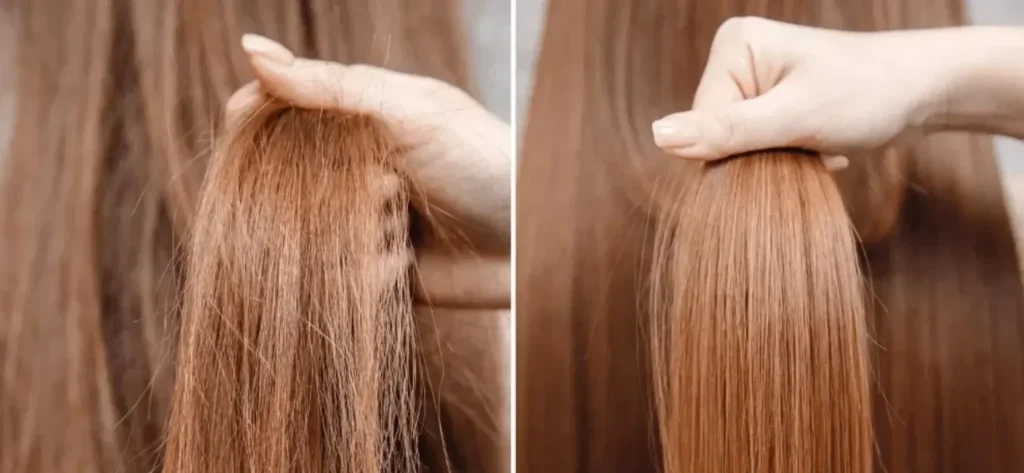
Brittle hair ends often develop after repeated heat, friction, chemical processing, or rough handling weakens the outer hair shaft. Once an end has split or snapped, it cannot truly fuse itself back together, but gentler styling can help limit further damage and make the remaining hair easier to manage.
Why Hair Ends Become Brittle
The ends are the oldest part of each hair strand, so they have usually been exposed to more washing, brushing, heat, sunlight, and styling than hair near the scalp. Repeated stress gradually wears down the protective outer layer.
Bleaching, permanent coloring, straightening treatments, and frequent use of hot tools can add to that damage. The American Academy of Dermatology recommends limiting excessive heat and handling hair gently, especially while it is wet. American Academy of Dermatology hair-styling guidance
Make Everyday Handling Less Harsh
Hair doesn’t need complicated treatment to benefit from gentler handling. Detangle from the ends upward rather than forcing a brush through knots, and avoid aggressive towel rubbing after washing.
Online wellness reading, including broader physical care resources, can make hair routines seem more complicated than they need to be. For brittle ends, reducing repeated mechanical stress is often a more useful starting point than continually adding new products.
Be Careful With Wet Hair
Wet strands can be easier to stretch and damage. A wide-tooth comb may reduce pulling, although tightly curled and textured hair may be easier to detangle while damp and conditioned.
Conditioner also improves slip, allowing knots to separate with less force. Apply it where your hair needs it most, which often means the lengths and ends.
Reduce Heat Without Giving Up Styling
Blow dryers, curling irons, and straighteners can remove moisture and weaken hair when used frequently or at high temperatures. Lower settings and fewer passes over the same section reduce unnecessary exposure.
People searching everyday safety information may encounter rigid rules about avoiding heat completely. That isn’t always practical. A better goal is reducing frequency, using the lowest effective temperature, and allowing hair to partially air-dry first.
| Styling Habit | Possible Problem | Gentler Choice |
|---|---|---|
| High-heat straightening | Dry, fragile ends | Lower temperature |
| Rough towel rubbing | Friction and tangles | Blot or wrap gently |
| Forceful brushing | Snapping and splitting | Detangle gradually |
| Tight daily styles | Repeated tension | Looser styles |
Give the Ends More Protection
Conditioners and leave-in products can temporarily smooth rough strands and reduce friction. They don’t permanently repair split hair, but they can improve manageability and make further breakage less likely during brushing.
General daily wellness content can be useful for building consistent self-care habits, though hair products should still be chosen according to your hair texture and scalp needs. If a product leaves the hair stiff, sticky, or harder to detangle, using more of it may increase rather than reduce handling damage.
What People Often Get Wrong About Split Ends
A common misconception is that oils, masks, or “bonding” products can permanently glue a severely split end back into untouched hair. Some products coat or strengthen the strand temporarily, which can improve appearance, but visibly damaged ends may eventually need trimming.
Another mistake is aggressively brushing damaged hair because it feels tangled. Extra force adds mechanical stress to strands that are already weak. Smoother detangling usually works better than trying to overpower the knot.
When Hair Damage Deserves Medical Attention
Ordinary brittle ends are usually a hair-care issue, but widespread breakage, sudden thinning, bald patches, scalp pain, marked itching, or unexplained shedding deserve closer attention. Changes can sometimes be related to scalp disorders, illness, nutrition, medications, or other factors that styling changes alone won’t address.
A dermatologist can examine both the scalp and hair and help determine whether the problem is simple shaft damage or something that needs evaluation.
Frequently Asked Questions
Can brittle hair ends become healthy again?
A damaged hair shaft cannot biologically regenerate because the visible strand is not living tissue. Conditioning can improve feel and appearance, while trimming removes severely split portions and gentler care protects the remaining length.
Does cutting split ends make hair grow faster?
Trimming does not increase the growth rate at the follicle. It can, however, prevent damaged ends from continuing to split upward and make growing hair look fuller and more even.
Should I stop using heat completely?
Not necessarily. Reducing frequency, keeping temperatures moderate, limiting repeated passes, and avoiding prolonged exposure can lower damage while still allowing occasional heat styling.
Protect the Length You Already Have
Brittle ends usually respond best to fewer damaging habits rather than a constantly expanding product routine. Lower the heat, reduce friction, condition the lengths, and trim heavily split areas when needed.
If breakage becomes widespread or comes with unusual shedding or scalp changes, arrange a professional evaluation instead of assuming styling is the only cause.
This article is for general informational purposes and is not a substitute for professional medical advice, diagnosis, or treatment.