
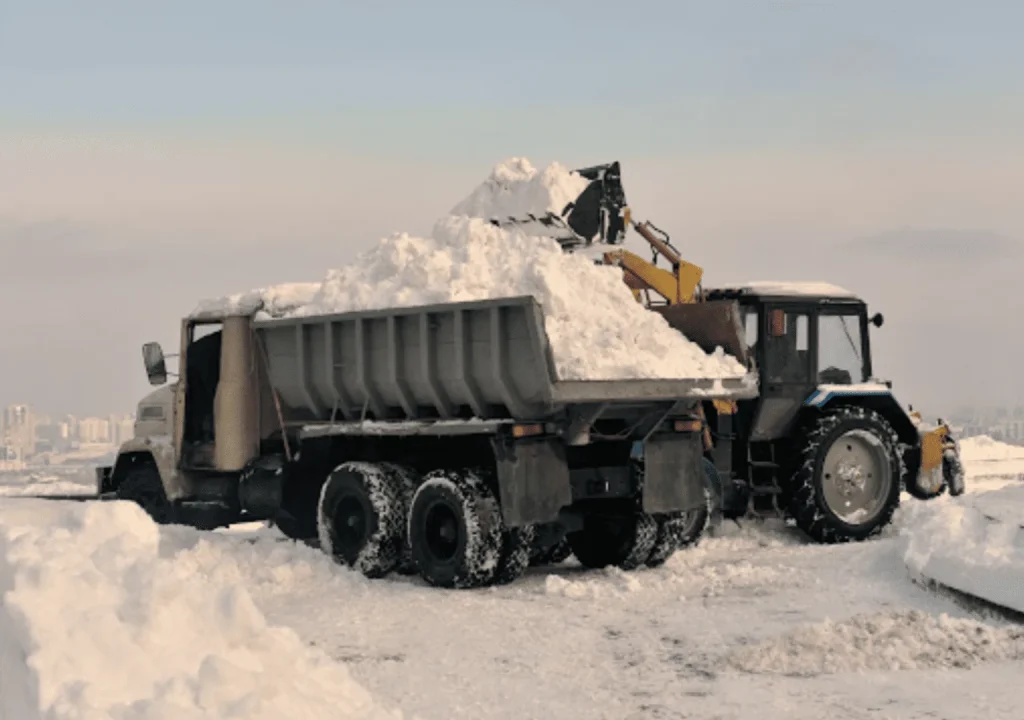
The Problem With Trying to Be Everything to Everyone
On paper, a full-service snow contractor sounds ideal.
They handle commercial plazas. Industrial yards. Office towers. Retail parking lots. Residential complexes. Maybe even municipal contracts.
Experience across sectors should mean strength, right?
Not necessarily.
In reality, when a contractor spreads themselves across too many property types, priorities shift during peak demand — and residential strata communities often feel that shift first.
It’s not about bad intentions.
It’s about operational pressure.
When the Storm Hits Everywhere at Once
Metro Vancouver doesn’t get snow in neat, staggered zones.
When a system rolls in, it usually blankets Richmond, Burnaby, Surrey, Coquitlam, and Vancouver at the same time.
That means every client on a contractor’s roster needs service simultaneously.
Now imagine that contractor manages:
- Two shopping centers
- Three warehouses
- An office complex
- Several townhouse communities
- A handful of condo properties
Which properties will get attention first?
Commercial sites often have:
- Strict opening-hour requirements
- Revenue implications
- Higher penalty clauses
- Larger plowable surfaces
Residential properties, while critically important for safety, don’t generate immediate revenue shutdown consequences.
So when trucks are limited, prioritization happens.
Quietly.
Residential Isn’t Just Smaller Commercial
There’s a misconception that residential snow removal is simply a scaled-down version of commercial work.
It’s not.
Residential strata communities have:
- Narrow internal roadways
- Parkade entrances
- Pedestrian-heavy walkways
- Staircases
- Entrances with constant foot traffic
- Seniors or mobility-sensitive residents
These environments require a different approach than wide-open parking lots.
Timing matters more.
Detail matters more.
Walkway attention matters more.
If a contractor’s operational mindset is built around large commercial surfaces, residential nuance can get overlooked.
Winter Road Salting Vancouver and the Commercial Bias
In high-demand service markets like Winter Road Salting Vancouver, many contractors prioritize large-scale roadways and commercial lots during active snowfall.
From a logistics standpoint, it’s efficient: long passes with plows, bulk salt application, high square footage covered quickly.
But that efficiency model doesn’t translate perfectly to strata communities.
Residential properties require:
- Precision salting, not bulk dumping
- Controlled spread rates
- Attention to drainage flow
- Monitoring freeze-thaw conditions in tight spaces
Over-applying salt in a residential environment may clear surfaces quickly — but it can damage concrete, landscaping, and building infrastructure over time.
Under-servicing creates slip risk.
It’s a delicate balance.
And not every contractor adjusts their commercial habits when servicing strata properties.
The Route Density Problem
Another hidden issue with full-service contractors is route density.
When a company services mixed property types, routes become complex and geographically stretched.
A truck might start at a commercial plaza in one city, move to an industrial yard, then head to a residential complex 25 minutes away.
During heavy snowfall, travel time increases significantly.
By the time that truck reaches the strata site, several hours may have passed since accumulation began.
Snow that could have been easily cleared early has now compacted under foot traffic and vehicle movement.
Compacted snow turns into ice.
Ice increases liability.
And now the job takes longer than it would have earlier — putting the rest of the route even further behind.
It’s a domino effect.
Communication Gaps Under Pressure
When contractors are stretched thin across multiple sectors, communication often suffers.
Strata councils may receive:
- Delayed responses
- Generic updates
- No clear ETA
- No service confirmation
Meanwhile, residents are asking questions.
“Why hasn’t the walkway been cleared?”
“Is anyone coming?”
Without clear communication from the contractor, property managers absorb the pressure.
Specialized residential-focused operators tend to build communication protocols specifically for strata needs — including:
- Storm activation notices
- Arrival confirmations
- Time-stamped photo reports
- Post-service summaries
Transparency reduces tension.
Silence increases frustration.
The Hidden Cost of Overextension
Growth looks good in marketing.
More contracts. More trucks. Larger service area.
But in snow removal, growth without strict capacity control creates instability.
Full-service contractors often chase large commercial accounts because they increase revenue quickly.
The downside?
During peak events, those same accounts demand priority.
Residential communities can unintentionally become secondary.
Not because they matter less.
But because commercial pressure is immediate and financial.
For strata councils, this can mean:
- Delayed clearing
- Inconsistent salting
- Increased slip exposure
- Frustrated residents
- Heightened liability risk
All during the same storm.
Specialization Creates Stability
There’s a reason many industries are shifting toward specialization.
When a company focuses specifically on one type of client, systems are designed around that client’s needs.
For residential strata communities, that means:
Routes planned around pedestrian safety.
Capacity capped intentionally.
Equipment sized appropriately for tight access areas.
Salt calibrated for smaller surfaces.
Communication tailored to council expectations.
Instead of trying to serve every market segment, specialization builds depth.
And depth creates predictability.
Questions Strata Councils Should Be Asking
Before signing or renewing a contract with a full-service contractor, consider asking:
- What percentage of your portfolio is commercial vs residential?
- During a major regional storm, how are priorities determined?
- How many properties are assigned per truck?
- Can you provide examples of residential-focused reporting?
- How do you adjust salting practices between commercial and strata sites?
The answers reveal operational philosophy.
And philosophy determines storm performance.
When the Snow Falls, Priorities Become Clear
Most contracts look similar on paper.
Response times.
Trigger depths.
Service descriptions.
But real performance shows during peak snowfall.
If a contractor’s fleet is spread across retail centers, industrial yards, and strata communities, something will inevitably be serviced later than planned.
For residential properties, that delay affects:
- Elderly residents navigating stairs
- Parents walking children to school
- Delivery drivers accessing entrances
- Visitors unfamiliar with the layout
The risk isn’t theoretical.
It’s immediate.
Final Thoughts
Full-service snow contractors aren’t inherently unreliable.
But when major storms hit Metro Vancouver, mixed portfolios create competing priorities.
Residential strata communities operate differently than commercial lots.
They require:
- Faster walkway attention
- Precision salting
- Tight route planning
- Clear communication
Snow removal isn’t just about moving snow.
It’s about protecting residents and infrastructure in high-density living environments.
When contractors try to serve every sector equally, residential nuance can get lost in the scale of commercial demand.
And during a heavy snowfall, that difference becomes very noticeable — very quickly.